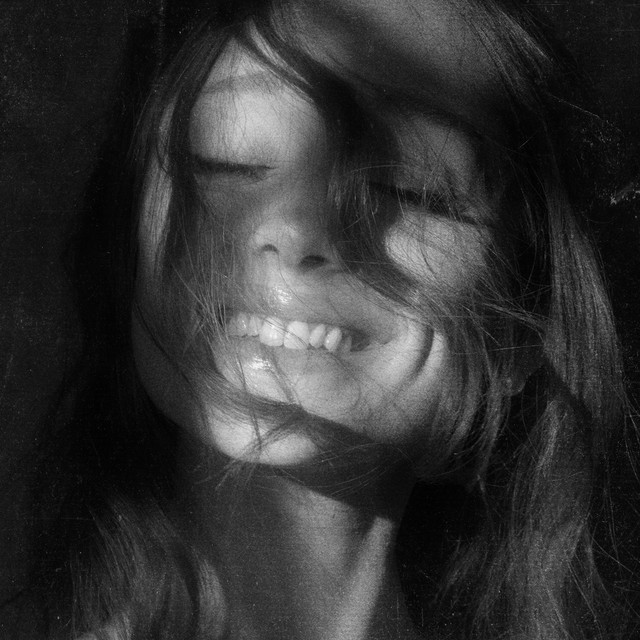
There’s a version of petal that could have been genuinely great. Ariana Grande, freed from the gloss of Eternal Sunshine, working with a stripped-back palette, writing every line herself, and doing so, apparently, from a place of righteous frustration rather than calculated pop strategy. That version exists in flashes across these 36 minutes. But too often the album blinks first — pulling back from its own edges just when you want it to commit.
That’s not to say this is a failure. A 6 is not a dismissal. petal is a record that earns its moments and then, quietly, wastes them. It’s an Ariana Grande album that sounds like it was made in a room with the lights off, which is interesting precisely because she’s spent most of her career performing under stadium rigs. The production, handled almost entirely by ILYA with Max Martin showing up on a couple of tracks, keeps things deliberately small. Speed garage rhythms on “Oh Well,” jangling indie-pop on “Bad Thing (Bunny Hop)” — there are genuine ideas here. But a smaller palette only works if the songs inside it are iron-clad, and too many of these aren’t.
Let’s start with what lands. “Oh Well” is the album’s most fully-realised moment: the speed garage pulse working as an unlikely foundation for those harmonised celestial vocals, creating a dissonance that actually says something. It’s not Nia Archives — it’s not meant to be — but as a pop star reaching sideways into a genre and finding something that genuinely fits, it’s the kind of move that makes you wish she’d leaned harder into it. The two-part suite of “Freak” and “Warning Signs (Interlude)” is the album’s most interesting gamble: the writing gets looser, more imagistic, and when it breaks into those explosive synths it briefly sounds like a different, more dangerous record trying to get out.
“I made myself so easy to carry — you never had to put me down.”
That line from “Never Get Over Me” is the kind of thing that stops you mid-listen. It’s precise, a little devastating, and it does the work that a lot of the album’s blunter observations about press intrusion and parasocial fan behaviour don’t quite manage. When Grande writes about being misread or cornered by public life, she’s articulating something real — but on tracks like “Big Feelings” the metaphors flatten into frustration rather than illuminating it, and frustration alone isn’t enough to hold a song up.
“Stay,” the closest thing here to a classic Ariana single and the track where Max Martin’s fingerprints are most visible, does come nearest to the breeziness of something like thank u, next-era writing. It’s good — genuinely, uncomplicatedly good — in a way that a lot of petal is too self-conscious to be. Which is perhaps the tension at the record’s heart: Grande said she wanted something “feral,” drawing on emotions she’d been “too shy or polite to tap into,” and yet the album, for all its studied darkness, is rarely actually feral. It’s more like a very considered impression of messiness. Compare it to Olivia Rodrigo’s ability to make ugly feelings sound genuinely unguarded on GUTS, and you start to feel the gap between intention and execution.
“Bad Thing (Bunny Hop)” is a case in point. The indie-pop tilt is fun, the Olivia Rodrigo-adjacent guitar jangle brings enough energy that it’s the album’s most immediately likeable track. But it’s also the one that sounds most like Grande trying on a sound rather than inhabiting it. There’s nothing wrong with trying things on — that’s what pop evolution looks like — but when the song underneath the aesthetic is a little slight, the costume shows.
The album closes on “Nowhere, Nobody,” and it’s the right call. There’s a bruised quietness to it that suits everything Grande has been circling throughout: the blurry frustration of being misunderstood, not by strangers exactly, but not quite by people who love you either. It doesn’t resolve anything, which is the honest move. Lorde has made a career out of that kind of deliberate non-resolution; so, in different ways, has Mitski. Grande is clearly looking at some of the same territory, and on “Nowhere, Nobody” she finds it without grasping.
The frustrating thing about petal is that it’s the work of someone who clearly has the instincts for something sharper — and who then, for whatever reason, doesn’t quite trust them. You can hear the album’s ambition most clearly in its stranger corners: the interlude, the speed garage experiment, that one perfect line about being easy to carry. What you can’t hear is a record fully convinced it’s allowed to be the thing it wants to be.
At 36 minutes, nothing outstays its welcome, and Grande’s vocal control remains remarkable even in deliberately restrained surroundings. But remarkable vocals in service of half-formed songs is still half-formed songs. petal is what happens when a pop star earns the right to take risks and then hedges the bet.