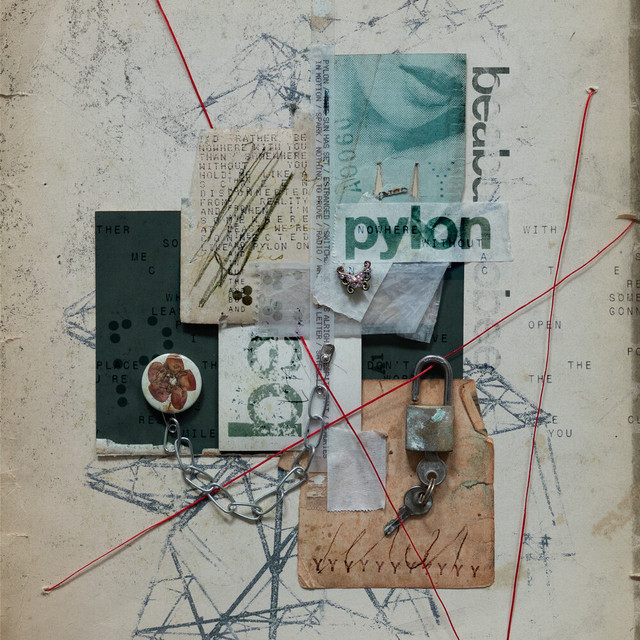
There’s a particular kind of dread that arrives sometime in your mid-twenties — not the dramatic, cinematic kind, but the slow, creeping suspicion that you have absolutely no idea what you’re doing and that everyone else somehow does. Beabadoobee has made that feeling into an album, and Pylon is sharper for it.
Beatrice Laus has spent the last few years living the kind of life that sounds glamorous from the outside and quietly destabilising from the inside: touring relentlessly, writing alone in hotel rooms, performing to crowds while feeling increasingly untethered from the people and places that keep you grounded. That isolation isn’t a pose here — it’s structural. It runs through Pylon like a fault line, and the album’s best moments are the ones where you can feel the pressure building along it.
Sonically, she’s pushed further into the abrasive end of her influences than she’s ever allowed herself to go. Fans of Beatopia looking for that record’s dreamy softness will find the dial turned decisively elsewhere. The DNA here is closer to Sonic Youth, Dinosaur Jr., and Helium — feedback as punctuation, guitars that don’t so much shimmer as grind. The title track opens the record with a riff that feels like something trying to escape from inside a wall, all distorted intent and barely-contained momentum. It’s an unambiguous statement of purpose: we are not here to be comfortable.
“Switchblade” is the record’s centrepiece argument for why that decision pays off. Built around a rhythmic aggression that doesn’t let up for three and a half minutes, it layers Laus’s vocal — still melodic, still unmistakably hers — over something that rattles and shakes beneath her. The contrast is the point. The prettiness and the noise aren’t fighting each other; they’re the same thing, which is exactly how mid-twenties panic feels. Similarly, “Estranged” does something quietly devastating: it takes what could be a straightforward breakup song and tilts it just enough off-centre that you’re never quite sure whether she’s mourning a relationship or a version of herself. That ambiguity is earned, not lazy.
“I don’t know where I’m going, I just know that I’ve been here before” — “Powerlines”
“Powerlines,” near the album’s close, is where Pylon earns its emotional weight most directly. It’s the record pulling back from the noise to ask what all the anger and movement has actually been about — and finding, uncomfortably, that it isn’t sure. That’s a braver conclusion than most artists in her position would allow themselves. Compare it to the confident resolution of Wolf Alice’s The Clearing or the studied self-assurance of Olivia Rodrigo’s recent work, and Laus’s refusal to wrap things up starts to look like its own kind of strength.
Not everything lands with equal force. “It’s Alright” and “Memories” are good songs — genuinely, not in the faint-praise sense — but they sit slightly outside the album’s central tension in a way that makes the sequencing feel mildly indulgent around the record’s midpoint. The Lilith Fair-adjacent softness that occasionally surfaces is interesting as a texture but risks diluting the momentum that tracks like “Sun Has Set” spend real energy building. There’s a version of Pylon that’s about twelve minutes shorter and absolutely ruthless, and it would be a classic. The version we have is still excellent; it just occasionally trusts its own tangents a little too readily.
The Far Out Magazine complaint — that the record is too polished to feel authentically abrasive — is worth acknowledging and then setting aside. It mistakes production clarity for emotional distance, which are different things entirely. Laus and her collaborators haven’t sanded the edges off; they’ve made the edges visible. “Nothing To Prove” is not a smooth song, whatever its recording budget suggests.
Watch the video for “Switchblade” on YouTube and you’ll get the aesthetic in concentrated form: it’s not trying to be scuzzy for the sake of it, it’s just not trying to look reassuring either. That distinction matters.
What Pylon ultimately demonstrates is that Beabadoobee has worked out something that takes most artists longer to learn: that the thing you’re most uncertain about is usually the most interesting thing to write towards, not away from. Where Mitski’s recent record turned inward with almost forensic precision, Pylon is more volatile, more impatient with itself — and the fidgety energy that creates is, more often than not, exactly the right register for what Laus is trying to say.
Eight albums into a career, you’d expect this kind of record; four albums in, at 25, it suggests she’s operating on a different timeline entirely.