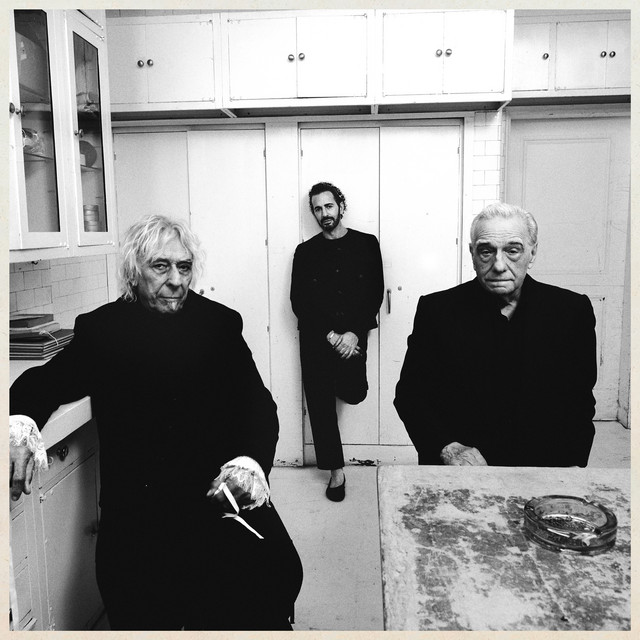
Music, Fashion, Film — Charli XCX
Charli XCX | Atlantic Records | 24 July 2026 | 9/10
Let’s get one thing straight before we start: Charli XCX never said she was making a rock album. She said it herself, she’s said it multiple times, and yet here we are, having spent the better part of six months watching the internet argue about it with the intensity of people who apparently have nothing else to do. What she actually made — alongside her indispensable collaborators A. G. Cook and Finn Keane — is something considerably more interesting than any genre classification would suggest. Music, Fashion, Film is an 11-track, 30-minute statement of intent that manages to feel simultaneously effortless and precisely engineered, the work of an artist who has spent years figuring out exactly who she is and now simply refuses to be anything else.
The album opens with “Rock Music,” a hyperpop banger that is, self-evidently, not a rock song — and that’s exactly the joke. There’s a sly intelligence at work here from the very first seconds. Charli isn’t trolling her audience so much as pulling them into a wink-and-nod conversation about the absurdity of how we talk about pop music. The track itself is a proper rush: sharp, compressed, and propulsive, built on the kind of production that A. G. Cook has been refining for over a decade, now sounding more confident and deliberate than ever. It sets up the album’s central tension perfectly — this is music that flirts with rock’s energy and attitude without ever wanting to be it.
“I’ve never thought about genre in a binary way… It’s just me and A. G. Cook and Finn Keane, doing our thing.”
That doing their thing, it turns out, is an exceptionally good thing. “SS26” follows, and it’s where the album really starts to move. Dark, danceable, and streaked with a kind of menacing glamour — it sounds like getting dressed for something you might regret. The rock-adjacent influence is most audible here in the distortion that sits beneath the mix, a low-level threat that gives the track its teeth without ever breaking into a guitar solo nobody asked for. It’s the kind of song that makes you realise Charli isn’t borrowing from rock music; she’s extracting its spirit and rebuilding it under different lighting.
“Card Declined” sits at track three and is the album’s most immediately accessible moment — the one you can feel clicking into place as a future ubiquitous presence the second it starts. Whether it actually gets there will depend on promotion and the right visual treatment, but the song itself deserves the run. It’s bright, slightly unhinged, and has a chorus that lodges itself somewhere behind your sternum and refuses to move.
The album’s second half is where it gets genuinely ambitious. “2007” is a gut-punch of nostalgia that never quite tips into sentimentality — it evokes the feeling of a specific era of pop without pointing at it directly, which is a much harder trick than it sounds. “Persona” is quieter, more interior, a moment where the album slows down enough to let you actually look at the person making it rather than just the spectacle surrounding her. It earns its place.
And then there’s “No One Lasts Forever,” the closing track, which runs to nearly six minutes and features a spoken contribution from David Cronenberg — yes, the filmmaker, the man behind Videodrome and Crash — and honestly, if that sentence doesn’t make sense to you, this might be the album that explains why it should. Cronenberg’s presence is atmospheric rather than gimmicky, lending the track a body-horror unease that fits Charli’s preoccupations with image, identity, and the performance of self almost too neatly. It’s the album’s boldest choice and its most rewarding one, a genuinely strange and affecting closer that leaves you sitting with the whole thing for a while after the runtime ends.
The companion film — which provides visuals for all 11 tracks alongside behind-the-scenes footage — reinforces the sense that Music, Fashion, Film is conceived as a total object rather than a playlist. It’s a move that puts her in company with artists like Beyoncé’s Lemonade era or early Gorillaz in terms of treating the album as an event with a visual grammar of its own, and it mostly justifies the ambition. The music video for “Rock Music” is worth your four minutes if you haven’t already clocked it — though by now, who hasn’t.
There are moments where the album’s brevity works against it. At 30 minutes, it occasionally feels like you’ve barely settled in before it’s over, and a track or two in the middle — “Yeah” in particular — pass without making quite the impression they might. But in a pop landscape full of bloated 22-track albums designed to maximise streaming metrics, there’s something quietly radical about a record this lean and this sure of itself.
After brat established Charli as the defining pop voice of its moment, the pressure to follow it up with something equally culture-shifting must have been immense. Music, Fashion, Film doesn’t try to repeat that trick — it’s less abrasive, more considered, and ultimately more personal — which means it may not generate the same wall-to-wall cultural saturation. But it doesn’t need to. This is an album made by someone who has earned the right to be exactly as strange as she wants to be, and who has the collaborators and the instincts to make that strangeness sing.
Charli XCX has spent her career refusing to stand still, and Music, Fashion, Film is the sound of an artist who has finally arrived somewhere so definitively her own that the question of what to call it has become completely beside the point.