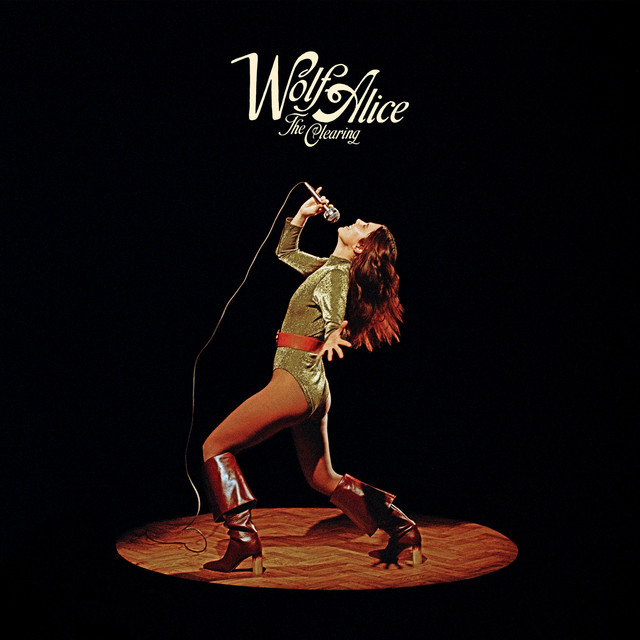
The Clearing
Wolf Alice
RCA / Columbia Records · 22 August 2025 · Rating: 9/10
There’s a particular kind of courage involved in refusing to give people what they want. After Blue Weekend — an album so unanimously adored it felt like a cultural weather event — Wolf Alice could have made it again. Louder choruses, that same cathedral-sized production, Ellie Rowsell’s voice cresting over everything like a wave that’s been waiting four years to break. They didn’t. The Clearing is quieter, slower, more considered, and in almost every way that matters, it is the braver and better record for it.
Produced by Greg Kurstin — a man whose CV runs from Adele to Foo Fighters without ever sounding like either — the album was written in Seven Sisters and recorded in Los Angeles, and that tension between London’s grey introspection and California’s wide-open light runs through every track. This is not a guitar record in the way the band’s early work was a guitar record. Joff Oddie is still present, still vital, but The Clearing reaches for something more interior. When “Thorns” opens proceedings with its stripped-back unease, a few bars in you realise the floor you expected simply isn’t there. That’s not a complaint. That’s the point.
“Bloom Baby Bloom” is the clearest statement of intent, a song that builds not through the familiar Wolf Alice mechanics of tension-and-release but through accumulation — emotional weight added layer by layer until the whole thing is almost unbearably tender. Rowsell has always been a gifted lyricist, but here she’s working with a precision that feels new. Nothing is overcrowded. Every word earns its place.
“I just want to bloom, baby, bloom / Not disappear into the room”
That’s not a lyric reaching for poetry. That’s someone saying something true and finding the exact right words for it. The distinction matters enormously and it’s what separates The Clearing from the kind of well-crafted-but-bloodless singer-songwriter record it might have been in lesser hands.
The mid-section of the album is where it establishes its own distinct personality most firmly. “Just Two Girls” is disarming in its simplicity — a song about intimacy and recognition that sits somewhere between a folk sketch and something far more charged — while “Passenger Seat” is the kind of track you need to hear twice before you understand why it got to you. There’s no obvious hook, no structural trick. It moves at its own pace and trusts you to follow.
Comparisons to Carole King’s Tapestry or Stevie Nicks in her prime have been floating around the discourse since the album dropped, and they’re not entirely wrong — there’s something of that same confessional directness here, that same sense of an artist holding nothing back while controlling every element of the room — but they also risk flattening what makes this specifically a Wolf Alice record. “Midnight Song” has a dreaminess that doesn’t belong to any of those reference points. It belongs to this band, and to Rowsell in particular, who sounds throughout The Clearing like someone who has decided, quite calmly, to stop performing and simply be.
Not everything lands with the same force. “Play It Out” edges slightly too close to the polished mid-tempo radio-pop that Kurstin can produce in his sleep, and the transition into the album’s second half occasionally feels like a slight loss of nerve — a few moments where the record pulls back when it might have gone deeper. The Quietus were not entirely wrong to note that Fleetwood Mac didn’t build their legacy on restraint alone, and there are two or three tracks in the album’s final third where you wish Wolf Alice would let themselves be a bit messier, a bit less considered.
But then “White Horses” arrives, and you stop worrying about what the album isn’t. Watch the official video here — though fair warning, no visual could quite prepare you for the way the track moves. It’s the most emotionally exposed moment on a record full of emotionally exposed moments, built around a melody that feels like it’s been waiting somewhere inside this band for years without anyone knowing where to find it. “The Sofa”, which closes the record, is gentler still — almost absurdly undramatic for a closing track — and it works precisely because The Clearing has never been interested in drama for its own sake.
This is a band operating from a different kind of confidence to the one that made Blue Weekend so thrilling. Where Blue Weekend felt like a band proving something to the world, The Clearing sounds like a band who’ve stopped needing to. That’s rarer than it sounds, especially four albums in when the critical weight of expectation is heavy enough to reshape everything it touches. You only need to look at what’s happened to other artists navigating their fourth-album pivot — the retreats into safety, the overcorrections, the bids for relevance that read as panic — to appreciate what Wolf Alice have pulled off here.
The fourth album is where bands often lose themselves. Wolf Alice have, improbably, found themselves instead.